


Farm to Food Bank Initiative Gives Back to Marylanders in Need

Originally published in the November/December 2026 print edition of the Old Line Farmer, Maryland Farm Bureau's newspaper
By Jeb Burchick
On an early morning in late September, volunteers gathered at the working farm of the Wye Research & Education Center in Queen Anne’s County. Agricultural Technician Lead for the center, Dr. Raymond Harrison, opened up a field of sweet corn to be gleaned. Amy Cawley, the Director of the Maryland Food Bank Farm to Food Bank Initiative, is loading up a trailer full of sweet corn – ready to be eaten in mere hours by families in need.
The Maryland Food Bank established the Farm to Food Bank Program to engage farms across the state by providing hungry Marylanders with fresh, local produce. With field gleanings, donations, and contract growing, the food bank works with farmers to supply high quality and nutritious food to communities in need.
For Amy Cawley, a farmer herself, this mission is key. In order to get food to those in need, farmers have to be involved.
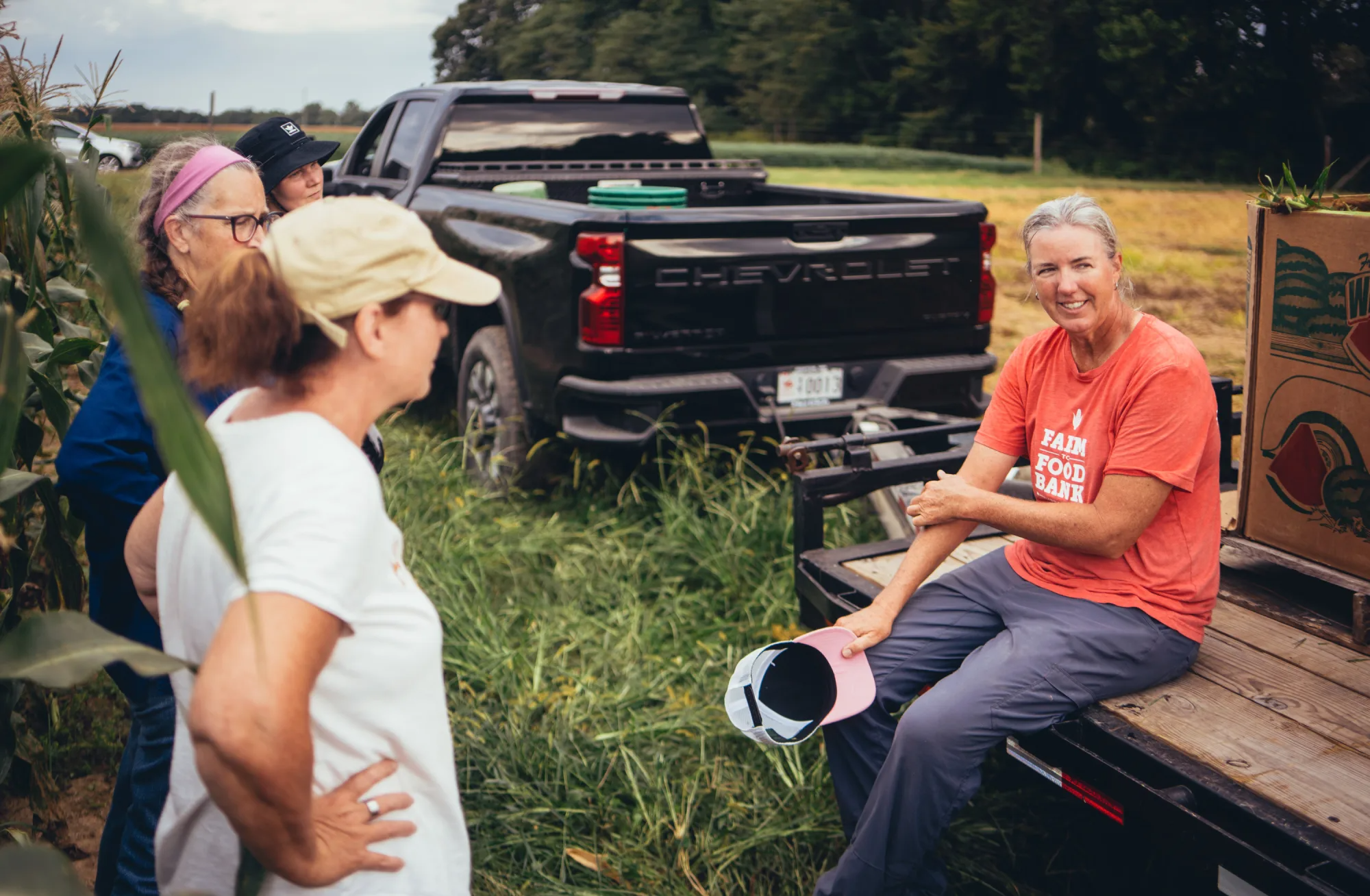 “There is no food bank without our farmers,” says Amy. “Everything we get starts on a farm somewhere.”
During these gleaning sessions, Amy and her team of volunteers pick produce on farms that would otherwise go to waste. Amy highlights the Maryland Food Donation Program, which provides tax credits to farmers who donate eligible food products to food banks and pantries certified by the Maryland Department of Agriculture. The Maryland Farm Bureau has supported legislation in Annapolis to expand and extend this program for many years, highlighting its benefit to both farmers and needy families.
Despite the backbreaking work in the hot September sun, smiles are plenty by the volunteers who are donating their time. Amy remarks that Andrea has been volunteering since her teenage son was preschool aged. Married couple Doug and Kate have been helping Amy for years as well. Christina is here to support the Food Bank while representing CareFirst. These volunteers are an extreme help to Amy, and there is always a need for more. The folks gathered this morning see their service as an actionable way to give back.
“We like volunteer organizations that want our time and effort rather than just our money,” says Doug, one of today’s volunteers. “We’ll give money, but that feels cold – this feels like we did something.”
In a generation where food can be ordered on your phone, hunger may seem like a problem from the past. However, the Maryland Food Bank estimates that approximately 2 million Marylanders may face hunger this year. Struggling families may be better described as “food insecure,” in which they don’t have access or are priced out of the fresh and nutritious food that would lead to a healthy lifestyle.
“I like to use the example of a can of soda and twizzlers or something as a meal,” describes Amy. “That’s not going to lead to a healthy, active lifestyle.”
That’s why the fresh food, donated by farmers, is so important to the Food Bank. From a community-wide perspective, local and fresh produce will lead to healthier outcomes for our food insecure neighbors.
“It saves them money and increases their health,” says Amy. “It’s a win-win for the farmer, the food bank, and the people who receive it.”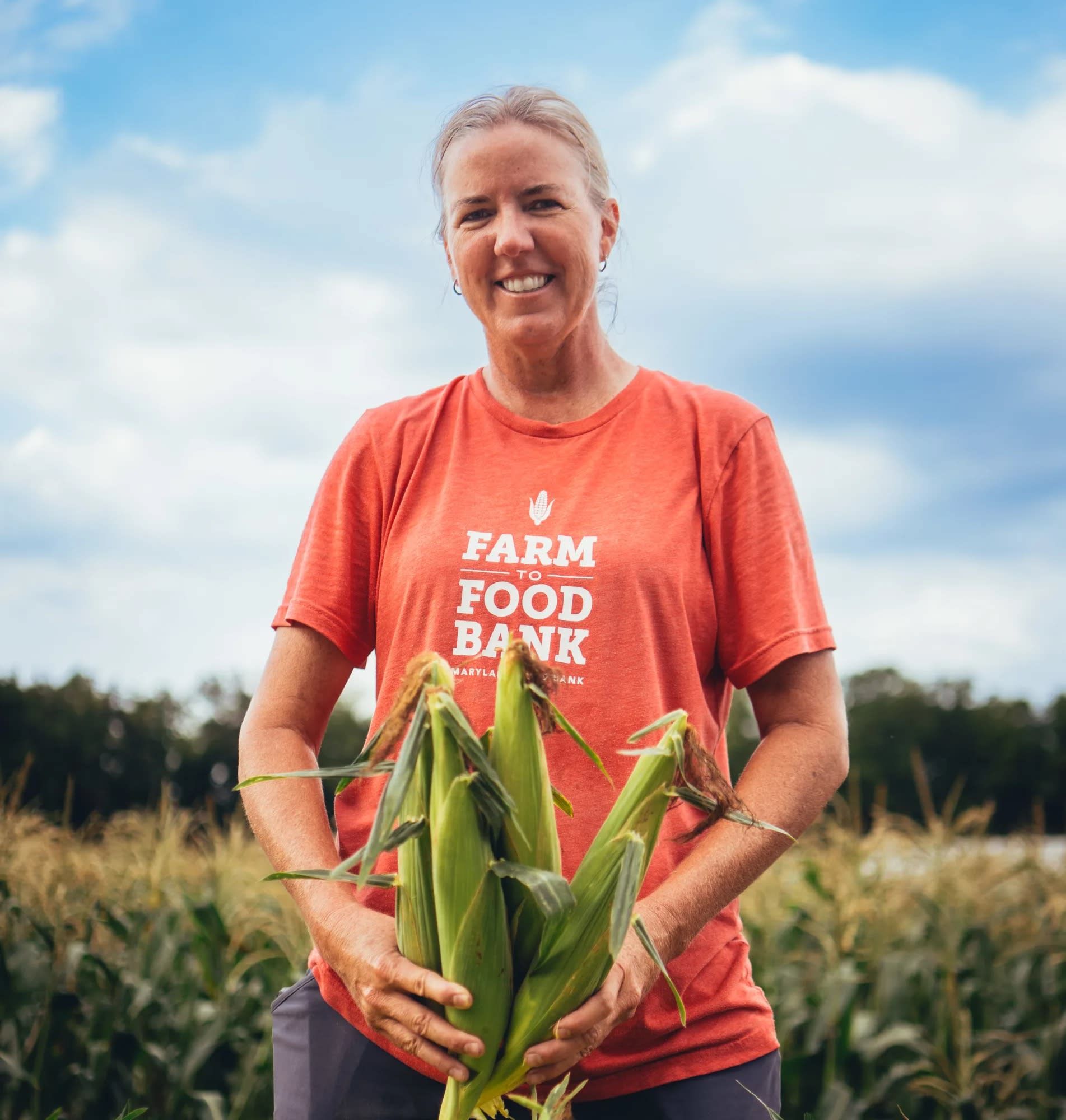
"The Maryland Food Bank prioritizes purchasing and distributing fresh, nutritious produce to our neighbors. And none is more delicious or healthful than produce that comes from Maryland farms,” said Meg Kimmel, the President and CEO of the Maryland Food Bank. “We are grateful to the more than 40 small, local farmers who provide fruits and vegetables through our Farm to Food Bank program."
In about an hour, Amy and her volunteers picked approximately 100 dozen ears of sweet corn. This corn is being delivered across the Bay Bridge to Love Wins, a women’s addiction recovery center and food pantry in Severn. If all goes to plan, families in need will be enjoying local and nutritious corn that was picked just earlier that day – likely much fresher than anything that could be found at a grocery store.
Amy comments that the manual labor of the job can sometimes be tough. Being just one person, peak growing season asks a lot of her, and it's why more volunteers are always needed. The week prior, she had to cancel a gleaning session when her knees and back gave out. Despite this, her answer was unequivocal when asked why she chooses to work this job: “Because I love it.”
“I’m a farmer's daughter, I grew up on a farm, I love being outside, I love helping people,” says Amy. “Everyday is different, and a lot of people need help.”